Mexican Back Rub
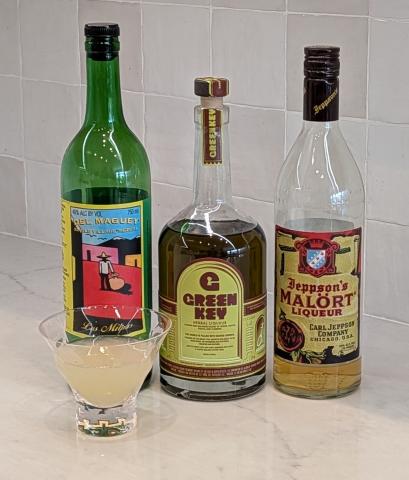
Combine all, shake strain into coupe
Part of my experimentation of making malort cocktails
Combine all, shake strain into coupe
Part of my experimentation of making malort cocktails
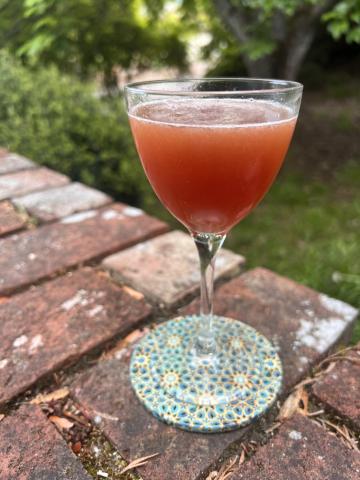
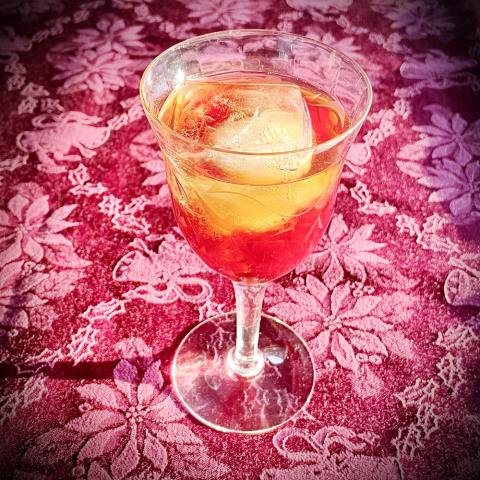
Build vermouth, peach liqueur, and amaretto in a wine glass. Add raspberries and gently press just until they split and bleed. Add a large cube placed against the side with drop of orange blossom water. Prosecco last, poured gently down the side of the glass. Give one slow stir — just enough to integrate.
When I first saw the Bertolucci film “Stealing Beauty” I was completely enchanted; less by the plot than by the place — the Tuscan countryside; the light, scents and sounds hanging in the air. This story of first love made me nostalgic for my own first love; for that particular kind of innocence where desire feels new and effortless and time stretches lazily through the afternoon. I wanted to live inside that film — where wine appears as lunch, fruit is eaten with stained fingers, and pleasure is indulged without apology. This drink is built like that memory: bright and buoyant at first, then gradually deeper, warmer, and sensuous by the finish. It’s an afternoon that slips into twilight before you even notice.
How's that for a description?
Stir and strain into a cocktail glass. Garnish with Orange peel.
Spices, rose jam, smoky, berries, muscat
This cocktail is a variation of the beloved modern classic 'Death and Taxes'. It started with the idea of swapping gin and whiskey for mezcal and brandy. The name comes from the joke that if death and taxes are unavoidable in life, then marriage and business should be avoided whenever possible. Incidentally, taking the first letters of the spirits also spells M & B.
However, upon further investigation, I found many variations such as the “Plaza Vieja,” “Souls of the Mountain,” “Dolores del Rio,” “1910”—all of which were essentially the same combination of mezcal and brandy, with only the “Punte Mes” component replaced by different ingredients. This led us to ponder how we could create a unique identity. After countless trials and errors, we finally found the solution: replacing “Punte Mes” with “Coca Americano” and “Montenegro.” When we tasted it ourselves, the result was surprisingly satisfying, which is why we’re introducing it here.
myself
Combine all ingredients into a mixing glass
Stir with ice
Strain over ice into an old fashioned glass
Garnish with 3 coffee beans
"Drink of 2026"
Edited to existing ingredient "Coffee bean", deleted recently added/uncategorized "coffee beans". I need to review this cocktail again and figure out what to do with it. Steve made an excellent follow up video explaining that we've all been doing this one wrong. I would like to add portions of that here with respect to the actual calls and notes on how the coffee liqueur was prepared--even if that is not what is in the current drink.
Stir with ice, strain into an old fashioned glass with a large ice cube, and garnish with a grapefruit twist.
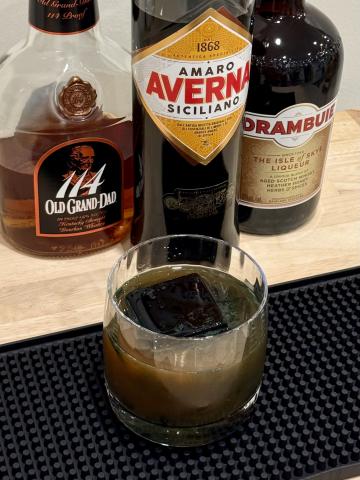
The Drambuie softens the Malört rather well.
I became inspired by the night before's Amaro Rusty Nail, and I took the idea in Malört direction after recalling how well it worked with Drambuie in the Bukowski. The combination ended up a bit too bright, but a dash of Angostura not only gave depth but complementary spice notes to the mix. For a name, I dubbed this one the Anderson Punch, the Chicken Man of Chicago, who was born in 1870 and became a legendary street performer that trained chickens to dance to his accordion and harmonica music. Punch was performing until the age of 101 before passing away in 1974.
Build, rock, stir, express peel then discard.
Stir with ice, strain into chilled cocktail glass. Optional orange twist over glass.
Calisaya is a cinchona (quinine) based liqueur style that generally benefits from a light touch in cocktails. It was an early pre-Prohibition amaro/bitter that disappeared around Prohibition, but has been revived in recent years. Pikesville is 110 proof, so it has some punch combined with the quinine--keep that in mind when making substitutions. The sassafras and sorghum bitters are semi-optional, broadening the flavor palette.
In this 250th year since the signing of the Declaration of Independence, this cocktail uses centennial (1876) era ingredients for a libation loosely hewing to a Boulevardier form. Pikesville Rye was originally a Maryland rye product, and the Maryland Line was the name used for Maryland's stalwart regiments in the Continental Army.
Stir ingredients with ice, strain into small cocktail glass. (Original instructions say shake.) Add pickled rakyyo to drink--original says to "add some crushed rakyyo" but I prefer to stir a whole or half rakyyo with the drink, then skewer it (or a new one) for the serve after straining. Crushed rakyyo at the bottom is messy, and rather strong on the final sip or two.
This is an early Japanese variation of a sweet herbal Gibson. The savory aspects of the rakyyo (pickled Chinese scallion) provide a unique flavor to the drink.
The original volumes were 1/3 oz each, equal parts summing to 1 oz with 2 dashes bitters (1.5 oz cocktail glasses were used by Café Line.) I have changed this to a still somewhat small/modern format drink but with more manageable 3/4 oz portions with 4 dashes of bitters.
The choice of vermouth can alter the perceived sweetness a lot in this drink, so play with the ratio of gin to Benedictine to dial in the flavor profile desired.
This was one of two signature drinks by Tokyo's Café Line in the 1924 "Kokuteeru", but it isn't clear if bartender Yonekishi Maeda created them--although this seems likely.
Most of the other drinks in "Kokuteeru" can be traced to the 1922 book by Vermeire, some to Kappeler's 1895 work, a few to Ensslin's 1917 publication as well as a few others (Boothby, Johnson, Straub.) Since Maeda translated and wrote the names phonetically in Japanese, and they have been translated back to English, a number of the cocktail names are garbled or incomplete in the 2022 reprint--I have a list of about 10 corrected at this time and tied back to their sources. There are a few others that appear either original, combinations of other preceding cocktails with the same name, or so completely altered as to be unrecognizable as to origin.
"Kokuteeru", 1924, by Yonekichi Maeda, translated and reprinted in English in 2022 (p. 61)
Infuse tequila with ripped argula for 2-5m; shake; double strain; garnish with radish slice or edible flower
A tequila daisy. Speed-Rack winner.
Muddle (fresh) ginger slices in the syrup in an old-fashioned glass. Proceed to build on a big rock and garnish.
For the brown sugar syrup: Keep stirring 1/2 c. light brown sugar, 1/2 c. granulated sugar (I used turbinado sugar), and 1 c. water over heat until dissolved. Add two cinnamon sticks, broken up, and simmer for five minutes. Cut the heat and let it sit for an hour or two, then fine strain.
For the bacon bourbon: Combine bourbon and rendered bacon fat in a jar and let sit for a few hours. Pop in the freezer. Once the fat is solidified, filter it out with coffee filters.
Created for the Reddit Original Cocktail Challenge, April 2026: Ginger and Cinnamon
For source, The Madrusan Cocktail Companion is probably what triggered "Drink of 2026". Never saw it before that.